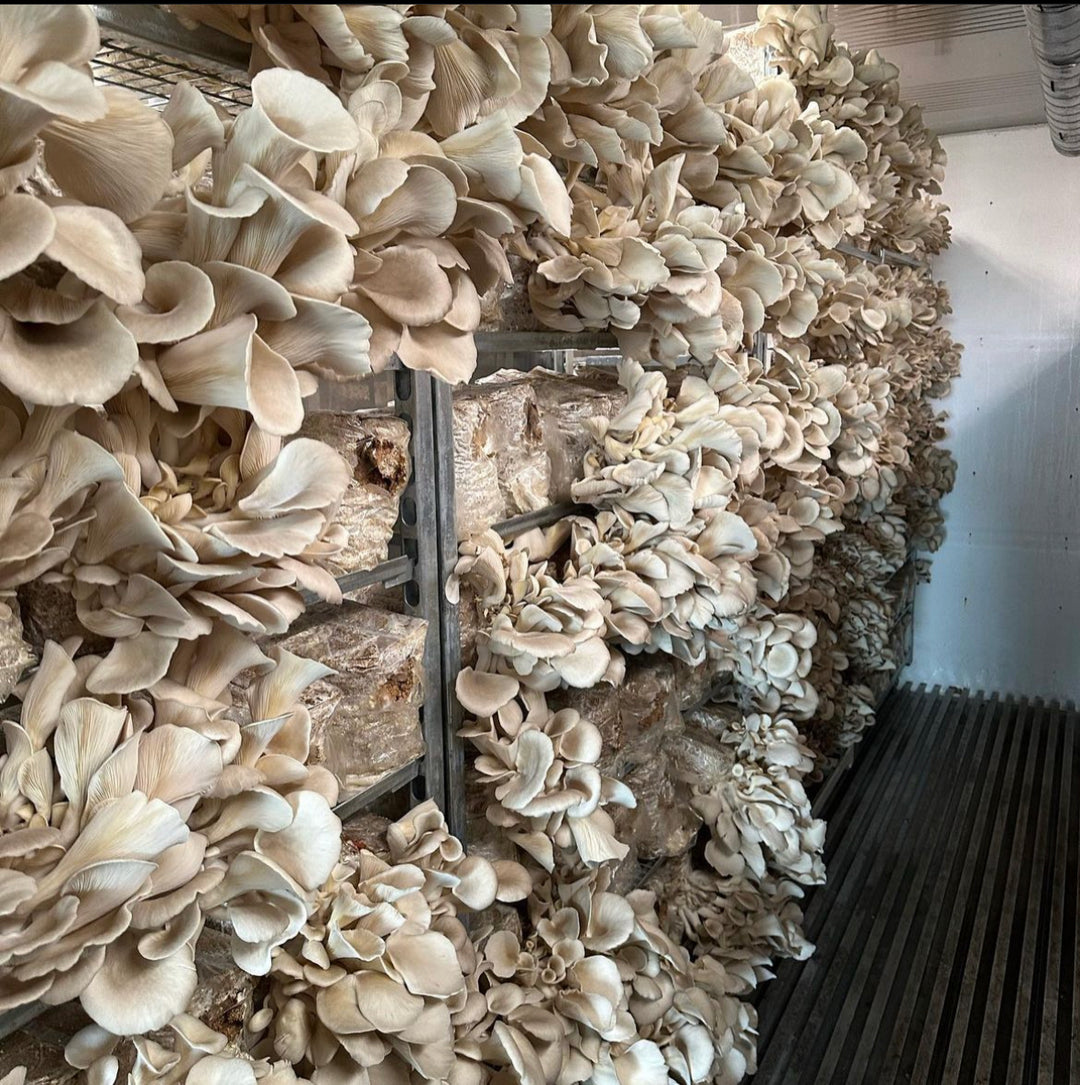
CEA (Controlled Environment Agriculture): The Science Behind Modern Indoor Growing

What Is CEA — Controlled Environment Agriculture?
CEA, or Controlled Environment Agriculture, is the technical term for growing crops
in fully or partially enclosed environments where key variables — light, temperature,
humidity, CO2 levels, and nutrient delivery — are precisely controlled. CEA
(Controlled Environment Agriculture) encompasses a broad range of growing
approaches, including greenhouses, indoor vertical farms, growth chambers, and
hydroponic facilities. What unites all forms of CEA (Controlled Environment Agriculture) is the principle that control over the growing environment produces more consistent, higher-quality, and more efficient crop production than traditional outdoor farming.
CEA (Controlled Environment Agriculture) is rapidly becoming one of the most
important concepts in modern food production. As the global population grows,
climate change destabilises conventional agriculture, and demand for local, fresh,
pesticide-free food increases, CEA (Controlled Environment Agriculture) offers
solutions that outdoor farming cannot. CEA (Controlled Environment Agriculture) is
no longer a niche academic concept — it´s a fast-growing industry attracting billions
in investment globally.
The Core Principles of CEA
CEA (Controlled Environment Agriculture) is built on the idea that every plant has an
optimal set of environmental conditions for growth, and that if those conditions can
be consistently maintained, the plant will perform to its maximum potential. In a CEA
(Controlled Environment Agriculture) setting, growers control the photoperiod (hours
of light per day), the light spectrum (which wavelengths the plant receives), the
temperature (both day and night), the humidity, the CO2 concentration, the nutrient
solution composition, and the pH. By optimising each of these variables, CEA
(Controlled Environment Agriculture) systems produce crops that grow faster, yield
more, and are free from the environmental variability that makes outdoor farming so
unpredictable.
CEA Technologies
CEA (Controlled Environment Agriculture) relies on a range of technologies working
in concert. LED lighting systems in CEA (Controlled Environment Agriculture)
facilities are designed to deliver the exact spectrum and intensity of light that target
crops need. Hydroponic systems in CEA (Controlled Environment Agriculture) deliver
nutrients precisely and efficiently. HVAC systems in CEA (Controlled Environment
Agriculture) facilities maintain optimal temperature and humidity. Sensors and IoT
monitoring systems allow CEA (Controlled Environment Agriculture) operators to
track growing conditions in real time and make adjustments immediately. Automation
increasingly handles routine CEA (Controlled Environment Agriculture) tasks like
seeding, transplanting, and harvesting.
CEA vs. Conventional Agriculture
CEA (Controlled Environment Agriculture) differs from conventional agriculture in
almost every respect. Where conventional agriculture depends on unpredictable
weather, seasonal cycles, and variable soil quality, CEA (Controlled Environment
Agriculture) operates independently of all external conditions. CEA (Controlled
Environment Agriculture) uses a fraction of the water required by field farming. CEA
(Controlled Environment Agriculture) eliminates the need for herbicides and
pesticides. CEA (Controlled Environment Agriculture) can be located anywhere — in
cities, in Arctic climates, in desert regions — because it creates its own growing
environment.
CEA in Commercial Food Production
Commercial CEA (Controlled Environment Agriculture) is one of the fastest-growing
sectors of the global food industry. Large-scale CEA (Controlled Environment
Agriculture) facilities — often called plant factories or vertical farms — produce leafy
greens, herbs, and microgreens for supermarkets and food service companies at
increasingly competitive prices. The most advanced CEA (Controlled Environment
Agriculture) operations use machine learning and artificial intelligence to
continuously optimise growing conditions, pushing yields and quality ever higher.
For growers in the Nordic region interested in CEA (Controlled Environment
Agriculture) — whether at home or commercial scale — https://nordichydro.com/
offers a range of CEA-appropriate equipment including LED lighting, hydroponic
systems, environmental sensors, and nutrient solutions.
CEA for Home Growers
CEA (Controlled Environment Agriculture) principles aren´t limited to commercial
operations. Home growers who use LED lights, hydroponic systems, and
environmental controls in their growing setups are practising CEA (Controlled
Environment Agriculture) on a small scale. Understanding CEA (Controlled
Environment Agriculture) concepts — even at a basic level — helps home growers
make better decisions about their setups and achieve more consistent results. The
same principles that make commercial CEA (Controlled Environment Agriculture) so
productive can be applied in a spare room or basement.
The Future of CEA
CEA (Controlled Environment Agriculture) is set to play an increasingly important
role in global food production as the challenges facing conventional agriculture
intensify. Investment in CEA (Controlled Environment Agriculture) technology is
growing rapidly, and the cost of key CEA components like LED lighting continues to
fall. In Nordic countries, where outdoor growing is severely limited by climate, CEA
(Controlled Environment Agriculture) offers a genuine pathway to greater food self-
sufficiency and a more sustainable food system.
CEA (Controlled Environment Agriculture) represents the cutting edge of modern
food production — a science-driven approach that offers unprecedented control,
consistency, and efficiency. Whether you´re a home grower looking to apply CEA
(Controlled Environment Agriculture) principles to your growing setup, or an
entrepreneur planning a commercial CEA (Controlled Environment Agriculture)
operation, understanding and embracing CEA is an investment in the future of food.